Wills vs. Trusts: What’s the Difference and Do You Need Both?
Learn the difference between a will and a trust, how each works in Texas, and whether you may need one, or both, to protect your wishes and the people you love.
Wills and trusts get lumped together so often that a lot of people assume they do the same thing. They do not, and understanding the difference can save your family time, money, and confusion down the road.
Estate planning remains something many Americans put off. According to Caring.com’s 2025 Wills Survey, only 24% of U.S. adults have a will, while 56% have no estate planning documents at all. If you are unsure whether you need a will, a trust, or both, you are far from alone.
Will vs. Trust: A Quick Comparison
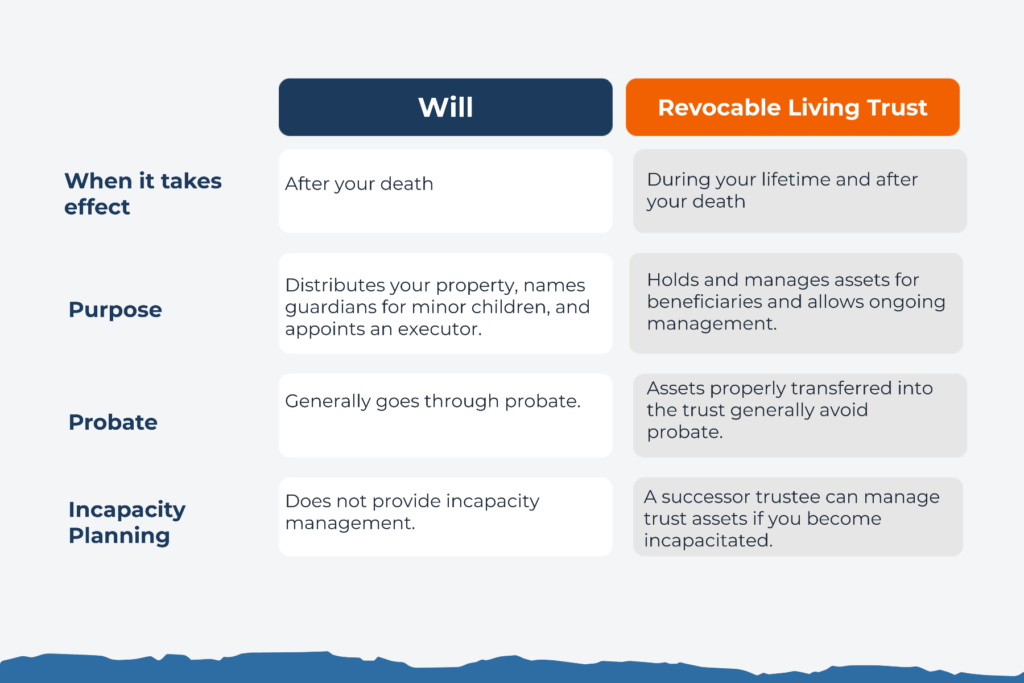
Every estate is different. An attorney can help determine whether a will, a trust, or both are appropriate for your situation.
What a Will Actually Does
A will is a legal document that directs how your property should be distributed after your death, lets you name a guardian for your minor children, and allows you to appoint an executor to carry out your wishes.
In most cases, a will goes through probate, the court-supervised process of validating the will and administering the estate. Certain assets, however, such as retirement accounts, life insurance policies, and jointly owned property with rights of survivorship, typically pass directly to the named beneficiary or co-owner and are not controlled by your will.
For many families with relatively straightforward estates, a properly drafted will provides a strong foundation for an estate plan. An attorney can help determine whether additional planning, such as a trust, makes sense
What a Trust Actually Does
A trust is a legal arrangement where a person, called a trustee, holds and manages assets on behalf of the people you want to benefit, called beneficiaries. Unlike a will, a trust can take effect while you are still alive and can continue managing assets after you pass away, often without going through probate at all.
The Consumer Financial Protection Bureau explains that a revocable living trust also lets someone step in and manage trust assets if you become unable to do so yourself, which is one of the reasons families with more complex situations choose this option. It is important to remember, though, that a trust only avoids probate for assets that have actually been transferred into the trust during your lifetime. If assets are left outside the trust, they may still need to go through probate.
Why Trusts Are Less Common
Trusts generally require more planning and legal work than a basic will because they must be properly created and funded with assets in order to work as intended. While they can provide valuable benefits in the right circumstances, they are not necessary for every estate.
The Texas State Law Library’s guide to wills and directives is a good starting point if you want to understand the paperwork involved in either option before meeting with an attorney.
So Which One Do You Need?
For most people, starting with a will is the right move. It is straightforward, affordable, and puts a plan in place for the things that matter most, like who inherits your property and who takes care of your children. If your situation is more complex, an attorney can walk you through whether a living trust makes sense in addition to a will.
The point is not to get everything perfect from day one. It is to put an estate plan in place rather than leaving your family to rely on state law and the probate process to sort things out after you’re gone.
One important thing to remember is that beneficiary designations on accounts like life insurance policies and retirement plans generally take precedence over what is written in your will. Keeping those designations up to date is an important part of any estate plan.
Texas Legal connects members with attorneys across the state who can help sort through these options and put the right documents in place, whether that is a will, a trust, or both. For more detail on how each one works, see Wills and Living Trusts: The Basics.
Related Articles
 Why Every Adult Needs a Will (And Why Most Americans Still Don’t Have One)
Most adults know they should have a will, but far too many put it off. Learn why a will matters at every stage of life and how it can help protect the people and wishes that matter most.
 Turning 18 in Texas: The Essential Legal Checklist Every Family Should Know
When your child turns 18, parents no longer automatically have the legal authority to access medical, financial, or school information. Here are the essential documents every Texas family should consider before a young adult heads to college or starts life on their own.
 The College Packing List Parents Forget: Legal Documents Every College Student Needs at 18
College packing lists cover dorm supplies and textbooks—but often miss the legal documents that matter once a child turns 18. Learn which documents can help families prepare before a student heads to campus.