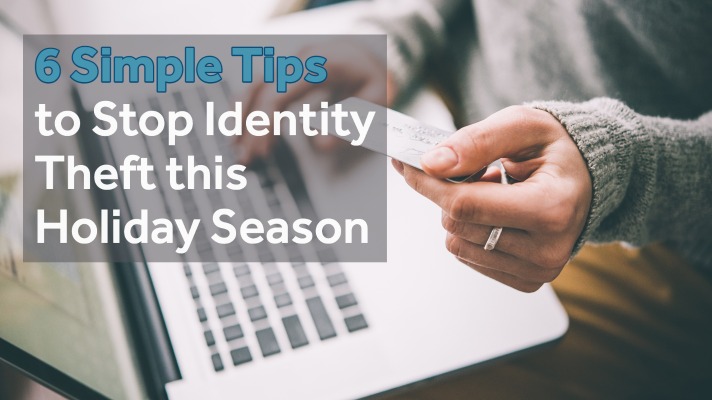
6 Ways To Stop Identity Theft During Holiday Shopping

If you’re like most Americans, your shopping list this holiday season is starting to get a bit long. With the increased cost of essentially everything, many savvy shoppers are looking for great deals online and deep discounts in-store this year to stretch their dollars. Scammers are also on the market for easy targets of identity theft.

Don’t let the season of giving be ruined by an identity thief or online scam. Keep your money safe while shopping this year by following these 6 simple tips.

1. Keep your devices secure.

Always log out of your accounts after you are finished online shopping. Never use a public WiFi network (like at a cafe or store) to do your online shopping or banking.

Before entering your credit card information into a webpage, check the browser address bar for the little lock symbol next to the address. That indicates that the website is secure. Click on the lock symbol in most browsers for more information on the website to verify that it’s legit and not a fake site created to steal your information.

2. Review your account statements frequently.

Don’t wait for your monthly credit card statement to check the charges. Check your online accounts regularly, especially after making a lot of purchases.

Sign up for push notifications to your cellphone if your credit card offers them. Most major credit cards can alert you each time your credit card is used.

3. Use your credit card instead of a debit card.

Debit cards take money directly out of your account. Credit cards guarantee that your money is not taken immediately and provide the opportunity to catch a suspicious charge.

4. Keep your personal information secure online.

Think about the information you post on social media. Identity thieves can use your information to answer ‘challenge’ questions on your accounts to reset your password. Your mother’s maiden name, your elementary school, your first pet’s name – many of these can be uncovered by snooping through your social media accounts.

Too many passwords to remember? Consider using a password manager like LastPass so that you can create unique, tough-to-crack passwords for each site without forgetting them.

5. Watch for skimmers.

Skimmers are small devices that scan credit card information. Identity thieves attach them to ATM machines or card readers. Before inserting your card, look for anything on the card reader that looks out of the ordinary.

6. Use an Identity Theft Monitoring Service.

If you’re worried about identity theft, put your mind at ease by getting an identity monitoring service. While you’ll still want to be vigilant about sharing your information, an identity monitoring service will make sure someone is keeping an eye on your accounts for any unusual activity.

And what happens if you become a victim of identity theft? Experian can help you put your life back together, from lost wallet protection to complex identity restoration services.

As Texas Legal Member, your plan includes identity theft monitoring and prevention from Experian. Email us at members@texaslegal.org or call customer service at 1-800-252-9346 to learn how to sign up.

Not a member of Texas Legal? Join for as little as $50 a month. If you are a veteran or bank with a credit union, your monthly cost could be even lower. Find out what your rate is today!

Join Texas Legal

Related Articles

Illustration for a wills vs. trusts guide featuring the Texas Legal armadillo mascot with the title "Wills vs. Trusts: What's the Difference and Do You Need Both?" Wills vs. Trusts: What’s the Difference and Do You Need Both?

Learn the difference between a will and a trust, how each works in Texas, and whether you may need one, or both, to protect your wishes and the people you love.

Family reviewing estate planning documents Why Every Adult Needs a Will (And Why Most Americans Still Don’t Have One)

Most adults know they should have a will, but far too many put it off. Learn why a will matters at every stage of life and how it can help protect the people and wishes that matter most.

Parent reviewing legal documents with 18-year-old Turning 18 in Texas: The Essential Legal Checklist Every Family Should Know

When your child turns 18, parents no longer automatically have the legal authority to access medical, financial, or school information. Here are the essential documents every Texas family should consider before a young adult heads to college or starts life on their own.